Why Prime Lenses are Key to a High-End Wedding Photography Brand
Why Prime Lenses are the Secret to a High-End Wedding Photography Brand
If you shoot a wedding with a zoom lens, you’re essentially shooting that wedding as a hundred different photographers. Think about it: every time you twist that zoom ring, you change your focal length, your distortion, and the entire feel of the image. For a high-end photography brand, your goal isn't to be a hundred different photographers with a hundred different styles. Your goal is to be you, delivering a single, cohesive, premium vision.
If you want to know why ditching your zoom lenses might be the best business decision you make this year, check out the full breakdown in the video below, and read on to discover why prime lenses are the ultimate secret to elevating your wedding photography.
The Problem with 'Safe' Zoom Lenses
When most wedding photographers start out, they inevitably struggle to find their artistic voice and achieve visual consistency. What’s the standard advice? Jump on the internet and buy the "holy trinity" of zoom lenses. We are told we absolutely must have a 24-70mm and a 70-200mm to survive a wedding day.
But buying what everyone else buys simply makes your work look like everyone else's. Relying on zoom lenses is often a safety net that actually holds back your creative potential. While versatility is nice on paper, the constant fluctuation of focal lengths completely shatters the cohesiveness of your final gallery.
Reason 1: Achieving Visual Consistency Through Fixed Focal Lengths
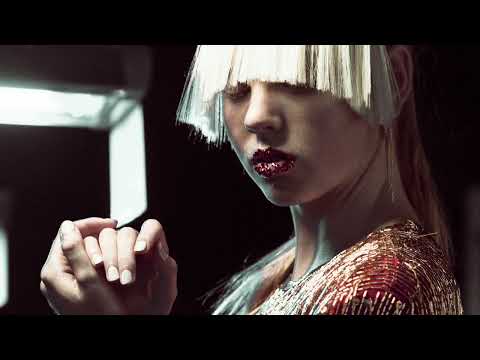
Every focal length carries its own distinct characteristics. When you shoot with a 50mm prime lens, it behaves exactly the same way every single time you lift it to your eye. You learn how it renders a room, how it frames a couple, and how it handles depth.
When you rely on a 24-70mm zoom, one image is taken at 28mm, the next at 34mm, and another at 65mm. Because each of these focal lengths renders the world differently, the photos lack unity. A final wedding gallery shot entirely on zooms can feel disjointed. By limiting yourself to just two or three prime lenses—such as a 35mm and an 85mm—you restrict the variables. This forced limitation immediately creates a cohesive, uniform, and incredibly professional look across the entire wedding day.
Reason 2: Optical Superiority—Bokeh and Sharpness
If you want to deliver high-end, luxury galleries, the optical quality of your images is non-negotiable. Prime lenses simply outperform zoom lenses.
Because primes are built to do one specific job flawlessly, the depth of field is vastly superior. The creamy background blur—or bokeh—produced by a prime lens is something a zoom lens simply cannot replicate. Furthermore, when you are shooting portraits with a shallow depth of field, the tack-sharp focus on the subject's eyes that a prime lens delivers will instantly elevate the perceived value of your photography.
Reason 3: Creating 'Pop' with Wide Apertures
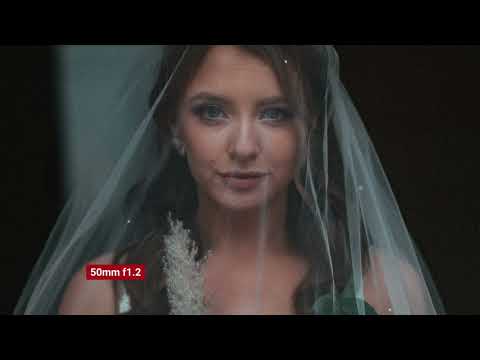
A massive artistic advantage of shooting with primes is access to wide apertures. A typical professional zoom lens maxes out at f/2.8. While f/2.8 is fine, it doesn't offer the signature, three-dimensional "pop" of a wide-open prime.
When you shoot a portrait at f/1.2 or f/1.4, you create intense subject separation. It completely isolates your couple from distracting backgrounds, giving your work a distinct, premium style that immediately stands out on Instagram or a wedding blog. It’s that stunning, shallow depth of field that makes potential clients stop scrolling and realize your photos look noticeably better than the competition.
Reason 4: Mastering Low Light Without Intrusive Flash
Low light is the ultimate stress test for an inexperienced wedding photographer. Dark reception halls and candlelit ceremonies can quickly degrade image quality if you are relying on a slow lens.
This is where primes sound like music to a wedding photographer's ears. The jump from an f/2.8 zoom to an f/1.2 prime allows an incredible amount of natural light into your sensor. This means you can comfortably shoot without a flash much later into the evening. While a flash is necessary for the final dance floor party, primes allow you to preserve the natural, romantic ambiance of the speeches, the first dance, and the twilight hours without blinding your clients with a disruptive flash.
Reason 5: Predictable Distortion for Perfect Portraits
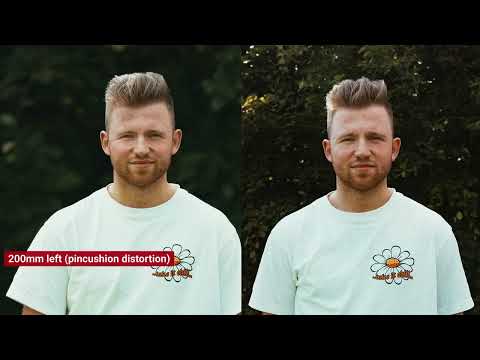
Understanding distortion is critical to taking flattering portraits. Every focal length warps an image slightly differently. An 85mm or a 50mm lens produces a relatively flat, highly flattering compression for faces. A 35mm, on the other hand, introduces a bit more rounding distortion.
When you use a prime lens, you naturally memorize its distortion profile. You know exactly where to position your couple in the frame to make them look their absolute best. With a zoom lens, it is remarkably easy to accidentally twist the ring to an unflattering focal length right as a fleeting moment happens, fundamentally ruining the portrait with unpredictable distortion.
Reason 6: The 'Fit Photographer' Mentality
Here is a bold statement: lazy photographers rely on the zoom ring, while fit photographers use prime lenses.
When you attach a prime lens to your camera, you become the zoom. If you want a wider shot, you have to physically step back. If you want a tight detail shot, you have to walk forward. This forces you to stay physically engaged and actively interact with the scene. "Zooming with your feet" forces you to discover better angles, interact more deeply with the environment, and ultimately capture more dynamic, intentional photos.
Building Your Essential Prime Kit
Transitioning away from the safety of zooms requires a leap of faith, but it pays incredible dividends for your brand identity. You don't need a massive collection of gear to shoot a luxury wedding. A core kit of just two or three lenses—typically a 35mm, a 50mm, and an 85mm—is all you need to cover an entire day flawlessly.
While high-end prime lenses are an investment, even budget-friendly primes often outclass expensive zooms in optical sharpness and aperture size. Make the switch, learn your focal lengths inside and out, and watch as your wedding galleries transform from disjointed collections into high-end, visually striking stories.
What do you think? Are you holding tightly to your 24-70mm, or are you ready to embrace the prime lens mentality? Watch the video at the top of this post for an even deeper dive, and if you found this helpful, be sure to hit play and join the conversation in the comments!
Frequently Asked Questions
Why are prime lenses better than zoom lenses for weddings?
Prime lenses offer superior optical quality, wider apertures for better low-light performance, and provide a consistent visual style that helps define a premium brand.
What is the best prime lens kit for wedding photographers?
A core kit usually consists of three essential focal lengths: 35mm, 50mm, and 85mm. These allow you to cover everything from wide environmental shots to intimate portraits.
How do prime lenses help with low-light wedding photography?
Prime lenses typically have much wider apertures, such as f/1.2 or f/1.4, which allow significantly more natural light into the camera compared to f/2.8 zoom lenses, reducing the need for flash.