Neewer Z2 PRO-C Review: Can a $250 Flash Beat Profoto?
Neewer Z2 PRO-C Review: Can a $250 Flash Replace a $1,100 Industry Standard?
Taking a brand-new, budget-friendly piece of gear to a high-end wedding is always a gamble. For years, I’ve relied on Profoto—an industry standard that commands a premium price tag for its absolute reliability. So, when I decided to shoot a high-stakes wedding using the $250 Neewer Z2 PRO-C speedlight, I fully expected to hate it.
I promised myself—and Neewer—that I would be brutally honest. I didn't want to give anyone a false "flash of hope." I fully intended to test this budget flash, roast its shortcomings, and go back to my $1,100 Profoto.
But as it turns out, the industry landscape is changing. Here is how a $250 flash managed to survive a demanding wedding day and completely change my perspective on budget lighting gear.
Introduction: The High-Stakes Wedding Field Test
Trading a Profoto for a Neewer feels a bit like trading a Tesla for an electric scooter. You go in expecting a massive downgrade in experience. I rarely lean heavily on flash throughout an entire wedding day, but when I do, I need it to fire flawlessly. There are no do-overs during a wedding reception.
I took the Neewer Z2 PRO-C (the "C" stands for Canon) into a fast-paced, high-end wedding environment, putting it through the wringer alongside my hybrid photo-and-video workflow. My goal was simple: find out if a modern budget flash can genuinely hold its own in a professional setting.
Flash as a Creative Weapon: Beyond Just Adding Light
For a lot of photographers, a flash is just a tool to fix a dark room. But if I only needed to brighten a scene, I could simply crank up my ISO or open up my aperture. Every tool in your camera bag should be capable of more than one thing.
I don't see a flash as something that merely makes light; I see it as a creative weapon. When I mount a speedlight to my camera, I want those photos to look fundamentally different from my natural light shots. I want to inject energy, motion, and a distinct visual style into the gallery.
Mastering Shutter Drag for Dynamic Party Photos
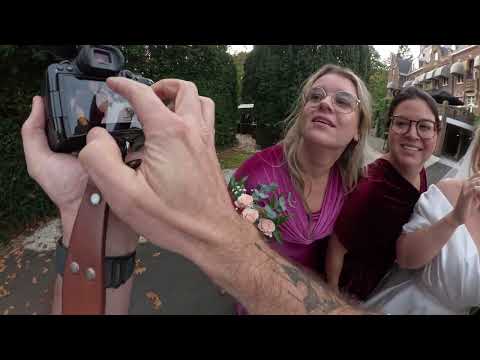
To achieve that signature high-energy look, I rely heavily on a technique called shutter drag. Instead of freezing everything perfectly, I slow down my shutter speed and intentionally introduce physical camera movement.
Every time I take a shot on the dance floor, I give my arms a little twitch. This creates intentional light trails and motion blur in the background, while the quick burst of the flash freezes the subjects in the foreground. It might look like I'm waving my camera around like a mixed cocktail shaker, but that deliberate drag captures the chaotic, electric energy of a great party.
The Honest Truth: What I Didn't Like
Because honesty is free, let's start with the negatives. As much as this flash surprised me, it isn't perfect.
The first downside is the lack of accessories. When you buy a Profoto, they provide enough magnetic modifiers and toys to make you feel like a spoiled toddler. The Neewer Z2 PRO-C comes with exactly one thing: the flash in a bag. There are no diffusers or extra modifiers included. You have to buy those separately. However, considering the massive price gap between the two systems, buying a few extra accessories isn't a dealbreaker.
Neewer Z2 PRO-C vs. Profoto: A Comparison
The bigger adjustment was the user interface. Profoto is famously idiot-proof; you turn it on, and it practically reads your mind. You are ready to shoot instantly.
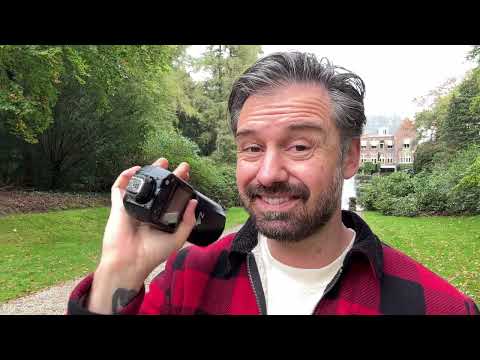
The Neewer operates more like an old-school flash. The menu system and button layout are complex. The first time I picked it up, I felt like a dad trying to figure out TikTok. I actually had to sit down, read the manual, and do some YouTube research to figure out how everything worked. Once you get the hang of it, it works perfectly fine—but expect a steeper learning curve right out of the box.
Performance Wins: Battery Life and Recycle Speed
Once I got past the menu, the Z2 PRO-C started showing off. The battery life on this thing is unbelievable—it feels like it’s powered by a nuclear fusion reactor. I shot an entire wedding day, mixing photos and video, and didn't have to swap the battery a single time.
It’s incredibly fast, too. It supports High-Speed Sync (HSS) up to 1/8000s. Realistically, I will probably never need to shoot flash at 1/8000s at a wedding, but it is great to know the capability is there. It also features a built-in wireless system, meaning you can easily transition it off-camera for more complex lighting setups.
Hybrid Workflow: Managing Photo and Video Simultaneously
Shooting hybrid requires a lot of multitasking. During this wedding, I was juggling my Canon R5 Mark II for video (fully rigged with a mic), a secondary camera for photos with the Neewer flash mounted, and two stationary cameras rolling for the ceremony. I had more gear on me than a Boy Scout.
When you are managing that much equipment, your gear just needs to work. The Neewer fired consistently without misfires or overheating.
However, a quick word to the wise: just because you can use flash all day doesn't mean you should. I intentionally keep my flash turned off during the wedding ceremony. Using a flash during sensitive moments is highly distracting to the couple and the guests. I am hired to capture the day, not interrupt it. Save the flash for the reception where it adds to the party atmosphere instead of ruining a sacred moment.
The Evolution of Budget Gear: Is it Professional-Grade?
Ten years ago, the stereotype was that budget third-party gear was cheaply made and unreliable. If you wanted professional results, you had to pay professional prices.
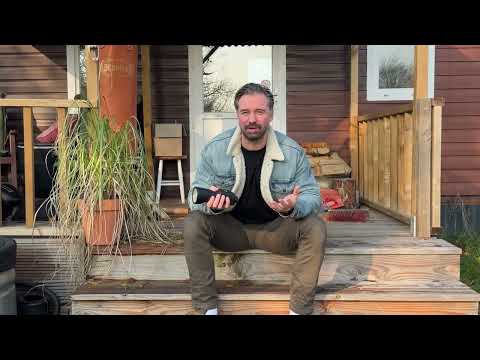
We are officially past that point. Companies like Neewer have spent the last decade rapidly improving their manufacturing quality. While the Z2 PRO-C might feel a tiny bit more plasticky than a $1,100 Profoto, it still feels solid, sturdy, and built to survive the chaotic environment of a wedding day.
These are no longer just cheap knock-offs or backup toys. They are reliable, primary tools for working professionals.
Final Verdict: A New Staple in the Camera Bag
I fully expected to shoot this review, put the Neewer Z2 PRO-C back in its box, and return to my Profoto. I didn't expect to say this, but the Neewer is staying in my primary bag, and the Profoto is being demoted to backup duty.
The couples loved the dynamic look of the shutter drag photos, the battery lasted all day, and the recycle speeds never left me waiting. When you realize that you can buy this flash—plus a wireless transmitter—for a fraction of the cost of industry-standard gear, it becomes incredibly hard to justify spending over a thousand dollars on a single speedlight.
If you are just starting out with flash, or if you are a seasoned pro looking for phenomenal value without sacrificing performance, the Neewer Z2 PRO-C is an absolutely brilliant investment.
Want to see the shutter drag technique in action (and maybe see some noisy goats)? Watch the full video review at the top of this post!
Frequently Asked Questions
Is the Neewer Z2 PRO-C good for wedding photography?
Yes. Despite its low price point, the Neewer Z2 PRO-C proved reliable in a high-stakes wedding environment, offering fast recycle speeds and exceptional battery life.
What is the difference between Neewer Z2 PRO-C and Profoto?
The Neewer Z2 PRO-C costs roughly $250 compared to Profoto's $1,100 price tag. While Profoto has a more intuitive user interface and included accessories, the Neewer offers comparable performance and battery life for a fraction of the cost.
Does the Neewer Z2 PRO-C support High-Speed Sync (HSS)?
Yes, the Neewer Z2 PRO-C supports High-Speed Sync up to 1/8000s, allowing for creative flexibility in bright conditions.
What camera systems is the Neewer Z2 PRO compatible with?
The 'C' in Neewer Z2 PRO-C stands for Canon. However, Neewer typically releases versions for other major brands like Sony (S) and Nikon (N).